
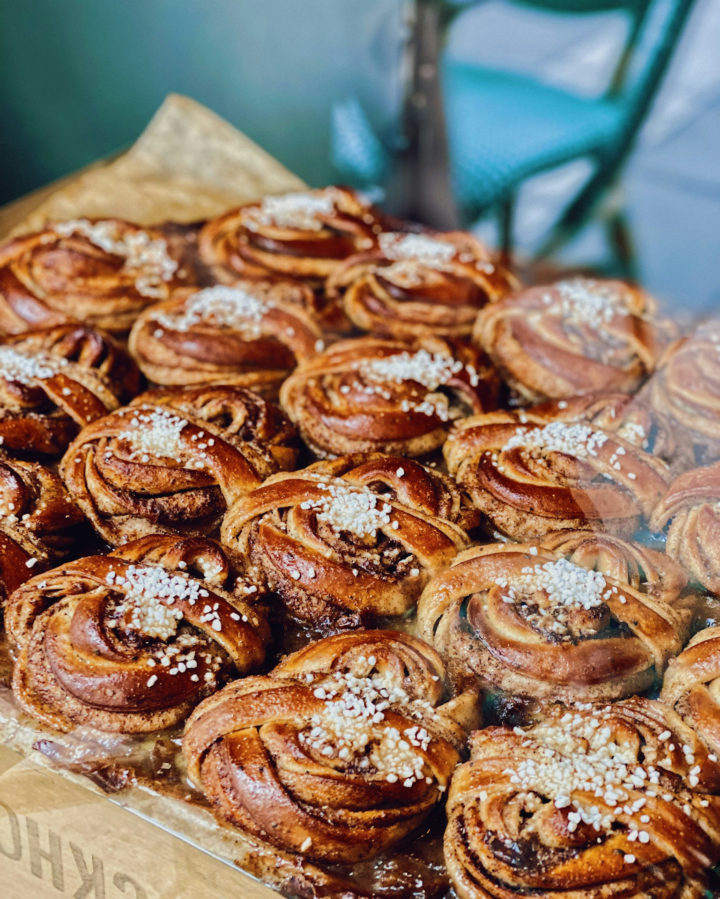
Cinnamon buns are nice, but they’re just the beginning. If you want to understand Finland, you need to understand Finnish eating habits—from the breakfast pastry that requires assembly to the late-night sausage pilgrimage that defines a proper night out.
Text: Mia Heiskanen
Finnish food culture doesn’t shout for attention. There are no Michelin-starred traditions or Instagram-famous dishes (well, except maybe cinnamon buns). Instead, Finnish eating is practical, seasonal, and deeply ritualistic. It’s about knowing which meal goes with which moment—and never, ever skipping coffee.
The Porridge: Finland Comfort Food
Before there was trendy overnight oats, Finns were eating puuro—porridge—every single morning. And they still are.
Finnish porridge isn’t just oatmeal. Kaurapuuro (oat porridge) is the most common, but you’ll also find mannapuuro (wheat semolina), ohrapuuro (barley), or neljän viljan puuro (four-grain) bubbling on Finnish stoves.
The key? Finns cook their porridge slowly with water and salt—never in the microwave—creating a creamy, thick consistency that sticks to your ribs through long winter mornings.
The toppings are where it gets interesting: a pat of butter melting into the hot porridge, followed by sugar and cinnamon. Some add cold milk around the edges, others lingonberry jam or fresh berries.
Then there’s riisipuuro—rice porridge—sacred Christmas food cooked with milk until deliciously creamy. Tradition dictates that one almond is hidden in the pot, and whoever finds it will have good luck in the coming year.
Porridge isn’t glamorous or Instagrammable. But it’s deeply Finnish—practical, comforting, and exactly what you need when it’s -20°C outside and the sun won’t rise for another three hours.
The Karjalanpiirakka Ritual
Forget avocado toast. The Finnish breakfast staple is karjalanpiirakka—Karelian rice pies—and they come with instructions. These oval-shaped pastries feature a thin rye crust filled with rice porridge, baked until the edges crisp up. But here’s the thing: you don’t just eat them. You assemble them.
The traditional topping is munavoi (egg butter)—a mixture of hard-boiled eggs and butter mashed together into a rich, savory spread. You slather it generously on top of the warm pie, and suddenly this humble pastry becomes something close to magic. Some Finns add a slice of cheese or smoked salmon. Others eat them plain with coffee. There’s no wrong way, but there is a Finnish way: with intention, not haste.
Karjalanpiirakka is sold everywhere—supermarkets, gas stations, bakeries—and it’s as essential to Finnish breakfast as coffee itself. Which brings us to…
The Afternoon Coffee Break: A Non-Negotiable Tradition
The kahvitauko (coffee break) is a sacred institution. At workplaces, it’s practically mandatory. At home, it’s a daily ritual. And it always—always—comes with something sweet. Usually pulla (a cardamom-spiced sweet bun) or korvapuusti (cinnamon rolls, literally “slapped ears” because of their shape).
The Finnish coffee break isn’t about productivity hacks or networking. It’s about sitting down, shutting up, and drinking your coffee in peace. No phones. No rushing. Just coffee, pastry, and maybe some quiet conversation. It’s a forced pause in a world that refuses to stop, and Finns have been doing it for generations.
Pro tip: If a Finn invites you for coffee, they’re not just offering caffeine. They’re offering time, attention, and trust. Don’t say no.
Rye Bread and Whatever’s On It
Finnish lunch is often simple: ruisleipä (dark rye bread) with toppings. And by toppings, we mean anything from butter and cheese to smoked salmon, pickled herring, cucumber, tomato, or cold cuts. The open-faced sandwich—voileipä—is an art form of efficiency.
Rye bread is the backbone of Finnish cuisine. It’s dense, slightly sour, and incredibly filling. Finns eat it at every meal, and it’s one of the healthiest breads in the world—high in fiber, low in sugar, and deeply satisfying. If you’re in Finland and haven’t tried authentic ruisleipä, you’re missing the point.
The Late-Night Grilli: True Soul Food
Here’s where things get interesting. After a night out—or sometimes just because—Finns make a pilgrimage to the grilli, a small kiosk that serves gloriously unhealthy fast food. The star of the show? Makkara (grilled sausage) and fries, often topped with ketchup, mustard, and sometimes a chaotic combination of BBQ sauce, garlic sauce, and chili sauce.
The grilli is not fine dining. It’s not even good dining, by most standards. But it’s essential dining. These kiosks are open late into the night (or early into the morning), serving as a social hub, a hangover prevention strategy, and a rite of passage. Every Finnish town has its legendary grilli, and locals will argue passionately about which one makes the best makkaraperunat (sausage and fries).
The beauty of the grilli is its democracy. Everyone ends up there eventually—students, businesspeople, tourists, and night shift workers. It’s where the carefully curated Finnish reserve melts away, replaced by the universal language of greasy food and shared experience.
The Finnish Eating Philosophy
Finnish food culture isn’t about spectacle. It’s about rhythm. Breakfast is fuel. Coffee breaks are sacred pauses. Lunch is practical. And late-night grilli runs are… well, they’re complicated, but they’re genuine Finnish.
There’s no pretense here. No one’s trying to impress you with foam or tweezers. Finnish food is honest, seasonal, and unpretentious. It’s rye bread because rye grows well in the north. It’s salmon and herring because Finland has thousands of lakes. It’s karjalanpiirakka because rice porridge in a rye crust makes sense when winters are long and you need something filling.
So, if you want to eat like a Finn, buy karjalanpiirakka from a supermarket. Take a proper coffee break with pulla. Make yourself an open-faced rye bread sandwich. And at 2 AM, find the nearest grilli and order sausage and fries with all the extras.